
Dressing for Your Silhouette: A Personal Stylist’s Guide to the 5 Most Common Body Shapes
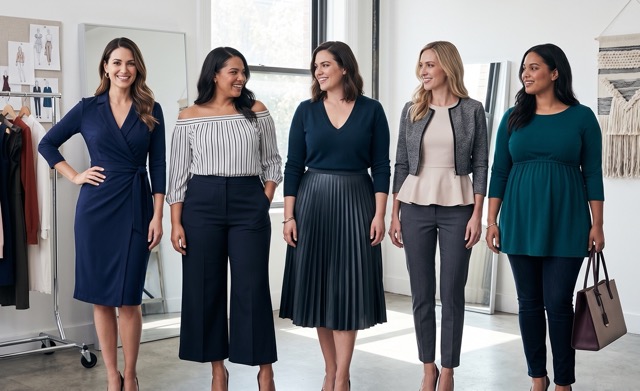
In the world of personal styling, the goal is never to “hide” your body or conform to a singular ideal. Instead, it is about understanding proportion, balance, and focal points. Understanding the relationship between your body shape and personal style is the most effective way to navigate trends and invest in pieces that make you feel truly confident.
Every individual has a unique frame, but most people fall into one of five primary categories based on the relationship between their shoulders, bust, waist, and hips. Here is a breakdown of the five most common silhouettes and how to style them with precision.
1. The Hourglass (The Balanced Frame)
The Hourglass is defined by shoulders and hips that are roughly the same width, with a clearly defined, narrower waist. According to data from the SizeUK national sizing survey, while many women aspire to this shape, it is statistically less common than the Rectangular or Pear shapes in the British population.
The Goal: To celebrate your natural symmetry and highlight the waist without adding bulk to the top or bottom.
Key Pieces: Wrap dresses, high-waisted trousers, and belted trench coats.
Styling Tip: Avoid “tent” silhouettes or oversized shifts. These hide your waist, which can make you appear larger by skimming over your widest points without showing the narrowest.
2. The Pear (The Triangle)
The Pear is the most common body shape. This silhouette features hips that are wider than the shoulders and bust, often accompanied by a defined waist and narrower arms.
The Goal: To draw the eye upwards and add subtle volume to the upper body to balance the hip line.
Key Pieces: Bardot necklines, puff sleeves, and statement necklaces. For the lower body, A-line skirts and wide-leg trousers in darker hues work beautifully.
Styling Tip: Boat necks are a secret weapon; they visually broaden the shoulders, instantly creating a more balanced appearance.
3. The Inverted Triangle (The Athletic Frame)
Characterised by shoulders that are broader than the hips, this shape often features a flatter bottom and “great legs.” It is a common silhouette for athletes and those with an active build.
The Goal: To add volume and interest to the lower half of the body while softening the shoulder line.
Key Pieces: Deep V-neck tops (which break up the width of the chest), pleated skirts, and cargo trousers with side pockets.
Styling Tip: Avoid heavy shoulder pads or stiff epaulettes. Instead, look for “fit and flare” silhouettes that create the illusion of wider hips to match your shoulder span.
4. The Rectangle (The Straight Frame)
In the Rectangle shape, the measurements for the shoulders, bust, and hips are fairly uniform, with little waist definition. This is often referred to as a “column” or “athletic” build.
The Goal: To create the illusion of curves or to lean into a sleek, high-fashion linear look.
Key Pieces: Peplum tops, cut-out dresses that “carve” a waist, and tapered trousers.
Styling Tip: Layering is highly effective for Rectangles. Using a cropped jacket over a longer silk camisole can break up the vertical line and add dimension to your frame.
5. The Apple (The Round/Oval Frame)
The Apple shape typically carries weight around the midsection and chest, often with slender arms and legs. Research into female body morphology suggests this shape becomes more prevalent as we age due to shifts in fat distribution.
The Goal: To elongate the torso and showcase the legs.
Key Pieces: Empire-waist tops, shift dresses, and slim-fit trousers.
Styling Tip: Monochromatic dressing (wearing one colour from head to toe) creates a long, uninterrupted vertical line. Opt for structured fabrics that skim the body rather than clingy jerseys.
A Note on Measurements
While these categories provide a helpful baseline, remember that most people are a “hybrid.” You might be a “Pear-leaning Hourglass” or a “Rectangle with Inverted Triangle shoulders.” The magic happens when you stop dressing for a label and start dressing for your specific proportions.