
What Actually Happens When You Go Personal Shopping With a Stylist?
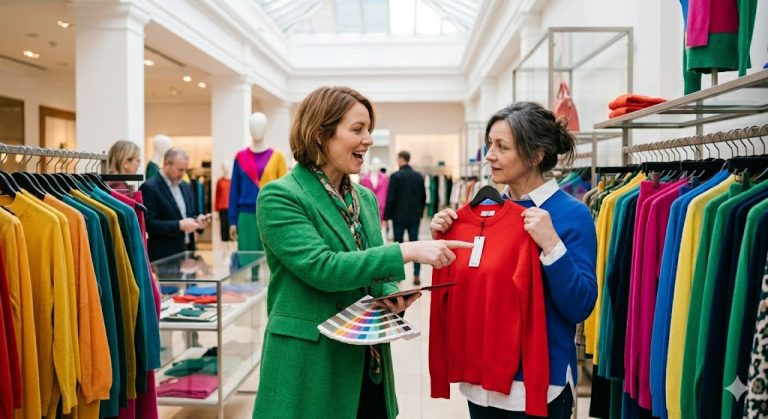
What actually happens when you go personal shopping with a stylist? Most people imagine it looks something like a film montage. You walk into a department store, someone thrusts beautiful things at you, you spin in front of a mirror, and you walk out looking like a different person.
The reality is more interesting than that, and much more personal.
I’ve taken clients personal shopping in Leeds for a couple of years now, and what strikes me every time is how different the experience feels from what people expect. The shopping part? It’s actually the second half of the day. Before we go anywhere near a clothes rail, something far more important has to happen.
It starts with a conversation, not a changing room
When I work with a new personal shopping client, the session opens with what I think of as the consultation (usually via a video call) and a questionnaire. I ask a lot of questions at this stage, and not the ones people tend to expect.
Not “what’s your budget?” straight away (it does come later though), but things like: What does a typical week actually look like for you? When you open your wardrobe in the morning, what does that feel like? Is there anything you avoid wearing, and do you know why? What do you want people to notice when you walk into a room?
Some clients have very clear answers. Others are surprised by how hard these questions are. I worked with a woman last year who paused for a long time at that last question before saying, quietly, “I’ve never really thought about what I want. I’ve just been buying things that seem sensible.” That one pause told me more than ten minutes of talking about brands and budgets would have.
This lifestyle and personality conversation isn’t a warm-up. It’s the whole foundation. The stylists I’ve learnt a lot from over the years spend real time here before touching a single garment. Because if I don’t understand how you actually live, I’ll end up buying you beautiful things you’ll never wear.
Building the Brief
Out of that conversation comes something I think of as the brief: a clear, specific picture of what we’re actually shopping for and why.
It covers the occasions you need to dress for, not just “work” in a vague sense, but what kind of work, in what environment, with what expectations. It takes into account the colours that work for your complexion and colouring. It notes any proportions or fit preferences you have. And it captures the overall feeling you want your wardrobe to give you: pulled together, relaxed, authoritative, softer.
The brief acts as a compass for the whole day. When we’re standing in front of a wall of options and everything starts to blur together (and it does, even for me), I come back to it. Every choice either fits the brief or it doesn’t.
For clients who’ve had their colour analysis done beforehand, this part moves noticeably faster. Knowing your season means I can cut the shop floor in half before we even look at a garment. No time wasted on anything that will drain the colour from your face, regardless of how much you love it on the hanger.
The Shopping Route
Here’s something most people don’t realise: a lot of the work happens before we meet.
I’ll typically do a scouting run ahead of the session, or at least spend time looking at what’s available across the shops I know well: what’s come in, what fits the brief, which floors and departments are worth our time. I’ll plan a route. We’ll start here for workwear, move through there for something to wear at the weekend, and make a detour to that smaller brand because they’ve got something I already know will suit you.
Clients often comment that we seem to move with purpose rather than wandering. That’s the point. Decision fatigue is real. If you try on forty things, by number twenty your brain has switched off and you can’t tell what actually works anymore. Good personal shopping means doing the editing before the fitting room, not inside it.
The Fitting Room
The fitting room is where things come together, and it’s also where many women are hardest on themselves.
There’s often a running internal commentary the moment someone steps in front of a mirror. I’ve heard versions of it hundreds of times: “Does this make me look…?”, “I’m not sure I can pull off…”. Part of my job is to gently interrupt that and offer something more objective.
The first thing I look at is fit. Not the number on the label. Fit on the actual body in front of me. A jacket that’s too large across the shoulder makes the wearer look smaller and less certain of herself, even if she loves everything else about it. A pair of trousers in the right cut for her proportions changes how she walks out of the room. These aren’t small details. They’re the details that make the difference between clothes that look like you own them and clothes you’re still breaking in.
Then I look at colour next to the face. This is where colour analysis pays off again. I’ve seen clients try on something in a shade they’ve loved their whole lives, but which pulls their skin tone grey or makes them look tired. Once you see it, you genuinely can’t unsee it. And once the client sees it, there’s often a little shift in how she makes decisions going forward.
Not everything we try on works. That’s fine. The fitting room is where we’re allowed to be ruthless, on the client’s behalf, and with kindness.
The Follow-Up
The session doesn’t end when we leave the shop.
After a personal shopping day, I always follow up with a summary of what we bought and why: which pieces work together, how to style them, what each item is actually for. If there were gaps we ran out of time to fill (there almost always are), I’ll note those too, with suggestions for how to approach them.
Some clients prefer to handle the remaining bits themselves with my notes as a guide. Others come back for a shorter follow-up session to finish things off. What I want either way is the same: for you to leave with a wardrobe you actually know how to use, that reflects who you are right now, and that makes getting dressed feel like something other than a daily negotiation with yourself.
Is It Worth It?
I’m not neutral on this, obviously.
But what I can tell you is what I see. Clients who come to me for personal shopping often arrive with wardrobes full of things they don’t reach for, and a vague feeling that nothing quite fits. They leave with fewer things, but things they actually wear. The shift isn’t about how much they’ve spent. It’s about having clarity.
If you’ve been putting off the idea because it feels like too much, or you genuinely didn’t know what it involved, I hope this gives you a clearer picture. It’s methodical, it’s personal, and once we’re actually out shopping, yes, it’s fun too.
If you’d like to find out more or book a personal shopping session, you can do that here. I’d love to work with you.